Chess.
Chess is a game of strategy, of calculation, of branching possibility, and of a severe headache. Chess can be picked up in a few minutes, but getting better requires constant dedication. Learning how to see, how to calculate, and how to recognize openings, lines, side-lines, variations, transpositions, common tactics, and endgames are all mass memorization tasks that require a large time investment to learn. Of course, you can choose to simply play on ability alone, without any studying, but that can only get you so far. In this page, I plan to outline a rough guide on how to play chess, and how to improve.
Disclaimer: this page on it's own is not nearly enough to become a good player. That requires hundreds of hours of studying and gameplay.
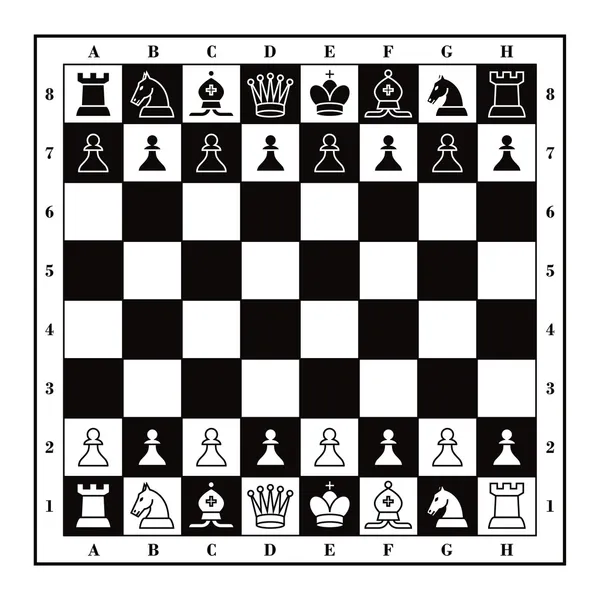
Basic Strategy:
There are some basic rules you need to know in order to play chess effectively.
Namely:
- How the pieces move
- Basic opening theory
- Hours of practice
- From my own knowledge
Opening Theory:
While there is a frankly incredible amount of opening theory in chess, learning a few of the following openings will likely suffice for the intermediate player. If you don't know any chess notation (how games are recorded below) You should check out GothamChess, linked below in the next section.
| Rank: | Opening: | First Move(s): |
|---|---|---|
| 1. | French Defense | 1.e4 e6 |
| 2. | Sicilian Defense** | 1.e4 c5 |
| 3. | Queen's Gambit Declined | 1.d4 d5 2.c4 e6 |
| 4. | Slav Defense | 1.d4 d5 2.c4 c6 |
| 5. | Italian Game | 1.e4 e5 2.Nf3 Nc6 3.Bc4 |
| 6. | Caro-Kann Defense | 1.e4 c6 2.d4 d5 |
| 7. | London System | 1.d4 d5 2.Bf4 Nf6 3.Nf3 |
| Citations: Chessable.com Openings for Beginners | ||
* The latter 3 are more difficult.
** Hard for beginners.
A Very Brief History:
Chess has been around for at least 1500 years, and there have been a lot of very obsessed people who've played the game over the years. Magnus Carlson, Bobby Fischer, Gary Kasparov, etc. They all know a lot more about the game than you or I. As such, studying their games, their ideas, how they think, etc., can be greatly advantageous to the intermediate-to-advanced player.
Here is a link to a game review of one of Magnus Carlson's games. It may be a bit much to analyze for a beginner, but GothamChess has several great series on analyzing beginner games and going over opening theory.